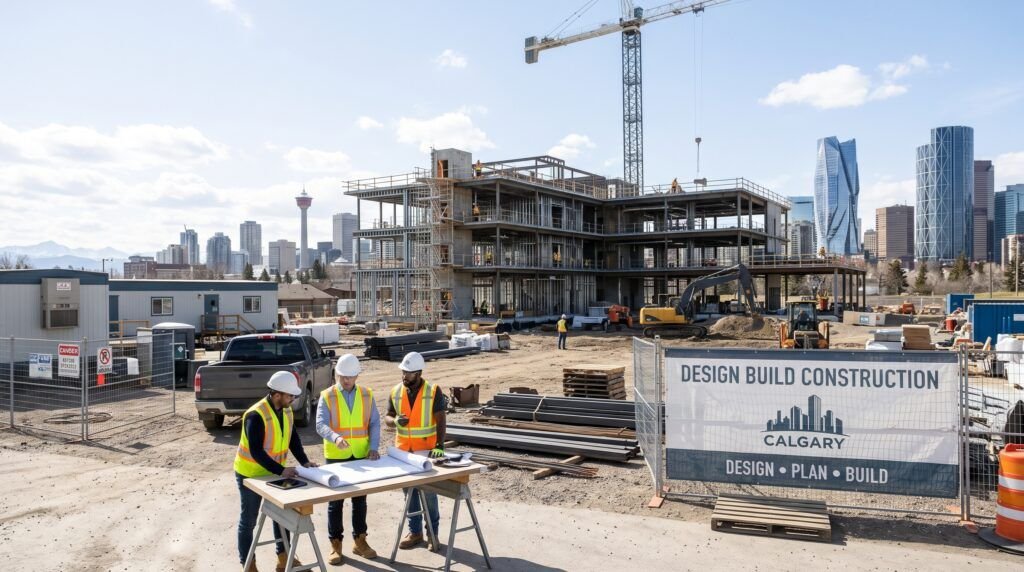

New home construction Calgary buyers dream about usually starts with a floor plan. It should start with the lot. New home construction Calgary is decided more by land than by finishes: zoning, servicing, grading and access set what can be built, and a beautiful plan on the wrong lot becomes a fight with the City, the soil and the budget.
This guide covers how to judge a lot, how infill and new community builds differ, what a custom build includes, how the timeline runs, and the warning signs when choosing a builder.
About Cannon Construction & Design Inc.
Cannon Construction & Design Inc. provides residential and commercial construction, home renovations, kitchen and bathroom renovations, basement development, secondary suites and custom home construction. The company also offers tenant improvements, permit drawings, development permit approval and building permit approval. As a licensed general contractor, WCB insured, carrying $5 million liability insurance and working with certified trades, Cannon supports projects with professional construction services. Its office is located at Unit # 212-123 4th Street NE, Calgary, AB, Canada. For project enquiries, call +1 403 918 0493 to discuss your construction requirements.
Start With the Lot, Not the Floor Plan
A lot looks simple from the street. Zoning decides the size and type of home allowed. Servicing decides whether water, sewer and utilities are ready. Grading decides where water goes in a storm, and access decides whether equipment can reach the build.
Walk the lot with your builder before you buy it. For custom home construction in Calgary, this walk catches a slope that needs a retaining wall, an easement that shrinks the buildable area, or a tree the City will not let you remove.
Infill Lot or New Community: The Real Trade Offs
New home construction Calgary buyers face this fork early, and both sides have honest advantages.
|
Infill lot |
New community lot |
|
|---|---|---|
|
Location |
Established street, mature trees |
New suburb, new roads and schools |
|
Rules |
Older district rules, neighbours close by |
New community guidelines and controls |
|
Servicing |
Existing lines, may need upgrades |
New servicing, ready to connect |
|
Best for |
Buyers who want an established area |
Buyers who want a fresh start and a fast move-in |
An infill build usually means a demolition first and closer neighbours during construction. A new community build usually means more rules about exteriors and fencing. The right choice depends on where you want to live for the next ten years.
What a Custom Build Includes From Day One
Every new home construction Calgary project follows the same sequence. Design and drawings come first: floor plans, elevations and a permit set. Permits follow. Then the build: excavation and foundation, framing and roof, windows and doors, rough-ins, insulation, and finally drywall, flooring, cabinets, counters, paint and fixtures.
The custom home building process also includes the parts buyers forget: grading, landscaping, driveway, fencing, and sometimes a garage or suite. Larger scopes often overlap with residential construction Calgary work on the same contract.
The Build Timeline in Plain Terms
In new home construction Calgary, a custom home runs in phases, each waiting for the one before it. Design and permits set the pace. Once the frame is up, the home gets closed in so interior work can continue through a Calgary winter. Rough-ins and inspections follow, then finishes and the final deficiency walkthrough.
Timelines move. Permit reviews, weather, inspections and finish selections all shift dates. What protects you is a written schedule with named milestones, not one promised move-in date given before drawings exist.
Red Flags When Choosing a Builder
Most problems in new home construction Calgary start at the hiring stage. Watch for these:
- No written contract, or a contract with vague scope and open ended allowances.
- No proof of licence, insurance or WCB coverage when asked.
- No finished homes you can see or visit, only renderings and promises.
- Pressure to sign quickly, or a price that only holds if you decide today.
- No clear answer on who manages permits and inspections.
- References that cannot be reached, or only one reference ever offered.
At the top end, luxury home construction in Calgary adds imported finishes and longer lead times, so check supplier relationships too.
Final Word
New home construction Calgary rewards buyers who start with the land, choose the right kind of build for where they want to live, and hire a builder whose finished homes they have seen. Planning a custom home in Calgary? Cannon Construction & Design Inc. handles it from lot walk to handover. For background reading on how home construction is generally structured, the reference page is a useful start.
FAQs
Should I buy the lot before hiring a builder?
Not always. Many buyers hire the builder first to help evaluate lots, because zoning, servicing and grading can change what a lot is worth building on.
What is the difference between an infill build and a new community build?
An infill build replaces an older home on an established street. A new community build sits on fresh land with new roads and schools and more community rules. The choice is mostly about where you want to live long term.
How long does new home construction Calgary take?
A custom home usually takes many months from permit approval to handover, and larger homes take longer. Permits, weather, inspections and finish selections all move the schedule, so agree a written timeline with milestones first.
What permits does a new home need in Calgary?
Typically a development permit and a building permit, plus trade permits for plumbing, electrical and gas work, with City inspections at each stage. Your builder should manage the permit file and confirm the exact list for your lot and design.
5. Can I change the design after construction starts?
Yes, but changes get more expensive the later they happen. A change on paper costs little. After framing or rough-ins it means rework, new materials and sometimes a permit revision. Decide as much as possible before the build starts.